
Rider Fitness: Have You Checked Your ‘Topline’ Yet?
Everyone’s judging horse ‘toplines’. But have you taken a critical look at your own ‘topline’ yet?
Fitness: More Than Just Squats
Let’s be real: horses are the athletes in our sport. Anyone who says otherwise—please try running the entire cross-country course or a dressage test without collapsing halfway. As the co-pilot, your job is to not disturb and collaborate effectively.
Skill and experience go a long way, and not all top riders are outrageously fit or sculpted. Take Albert Zoe, one of the best riders I know. He might not look like a Men’s Health cover model, but his feel and core movement control are from another world. Disagree? Watch him ride, and you might just change your mind.
Back to the Topic
When it comes to fairness, there’s one factor you have full control over to support your equine partner—regardless of skill, experience, or budget: your own fitness.
‘Fitness’ is a broad term, and here’s what’ in it:
- Body Awareness: Knowing where every part of your body is, why it’s there, and how it’s feeling (relaxed, activated, tense).
- Core Stability: Controlling your body’s center to move arms and legs independently. Personally, I prefer core movement control over core stability.
- Mobility: Moving key joints like hips and spine freely in all directions.
- Muscle Chain Balance: Yep, our ’topline’ matters—not just for showing off the effects of riding on glute muscles in breeches 😉
Fitness and Fairness?
Your fitness as a rider is key to creating harmony between horse and rider. By working on body awareness and balanced muscle development, you’ll make your aids more precise and create smoother, less disruptive interactions. This also reduces the risk of discomfort or injury for the horse in stress situations, like spooks or sudden moves. If your core movement control isn’t up to par, you’re at a much higher risk of hanging on the reins when something unexpected happens. Ask an equine dentist—they’ll tell you how many rider-induced injuries they see daily.
But it’s not just about spooks, falls, or unplanned incidents.
Research shows that a rider’s posture directly affects the horse’s movement, especially at faster gaits where any rider asymmetry can disrupt stride, back movement, and overall gait stability. Studies further emphasize that the rider’s balance—especially pelvic alignment and core stability—affects how the horse carries its weight. Bad posture can restrict your horse’s back, limiting its range of motion and putting pressure on the thoracic and lumbar regions during trot or canter
MDPI
How?
When it comes to ‘rider fitness,’ consistency is key. Ten minutes daily beats two hardcore gym sessions a week. Sure, boot camps are great for that rider bum (not that I’d know firsthand), but for riding performance, targeted fitness routines are what matter. Apps like Equesoul offer accessible daily exercises that strengthen core muscles and improve body awareness, giving you a major edge in the saddle. Balance training, core work, and yoga-inspired moves can make a real difference in stability and posture. Building this habit brings you closer to a ‘neutral’ seat, where your aids are subtle and communication with your horse is seamless
If you want to be fair, act fair. Prioritize fitness and posture off the horse. This doesn’t just benefit you—it supports your horse’s biomechanics, making for a smoother, more respectful ride.
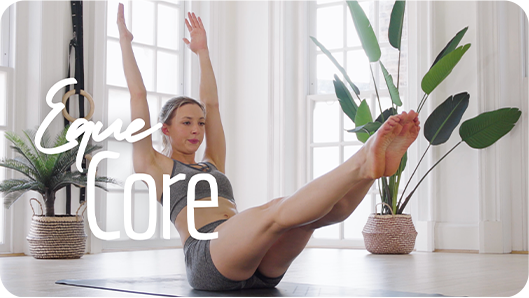
Pros and Cons of the different Options
To develop the strength, balance, and body awareness that riding requires, there are a few main approaches. Each has its pros and cons, so here’s a breakdown of rider fitness apps, gyms, and 1:1 personal training.
- Rider Fitness Apps
- Pros:
- Convenient and Cost-Effective: Apps like Equesoul offer guided, equestrian-specific workouts that are budget-friendly and available anytime, anywhere. Need a 10-minute pre-ride flow to help you sit straighter? There you go.
- Customizable Programs: Many apps have structured routines and progress tracking, making it easy to stay consistent and build the workout tailored to riding and / or your own weaknesses.
- Body Awareness Exercises: Apps sometimes include exercises for body awareness and mental well-being, not to be underestimated for what we need in the saddle.
- Cons:
- Limited Personal Feedback: Apps can’t correct your form in real time, so habits or imbalances might go unnoticed.
- Self-Motivation Required: You’ll need commitment to stay consistent and push through workouts without the accountability of a class or trainer.
- Pros:
- Training in Gyms and Classes
- Pros:
- Variety of Equipment and Classes: Gyms offer diverse equipment and classes (pilates, yoga) that are perfect for developing core strength, flexibility, and balance.
- Community Support and Motivation: Group settings can provide motivation and camaraderie.
- Flexibility to Cross-Train: Gym memberships let you cross-train, which improves general conditioning beyond riding-specific needs.
- Cons:
- Lack of Riding Focus: Fitness classes aren’t tailored for riding, so you may need to adapt exercises to benefit your posture and technique.
- Time and Cost Investment: Gym memberships and regular classes require time and money, and for many riders, it’s the gym or the horse. Let’s be real—there’s only one correct answer.
- Pros:
- Personal Training 1:1
- Pros:
- Individualized Attention: A trainer can target your specific strengths, weaknesses, and goals, providing feedback to improve form and avoid injury.
- Accountability and Progress Tracking: Working with a trainer adds accountability, making it easier to track progress and stay motivated.
- Professional Expertise: Trainers with equestrian experience can address unique needs like pelvic alignment and core stability, which translates to better riding performance.
- Cons:
- Higher Cost: 1:1 personal training is generally the most expensive option.
- Availability of Equestrian-Specific Trainers: Finding a trainer who knows equestrian fitness can be challenging, limiting the program’s relevance if they’re unfamiliar with riding.
- Pros:
Each option has its own advantages, and often, the best approach is a combination that keeps workouts varied and engaging while meeting your specific riding fitness needs.
Personally, I love apps for daily routines and use Equesoul and Down Dog (a yoga and meditation app). I like the flexibility—10 minutes on a busy day or 45 minutes on the weekend. But when I had a period of back pain, that effected my riding (and my mood), I reached out to my trainer Nicole, who created a specific routine to tackle my issues.